

Urban life · In-depth article
Where to take used batteries and devices with built-in batteries
Loose household batteries, button cells and old phones go to different collection points. Check what you have and whether it is damaged before you set out.
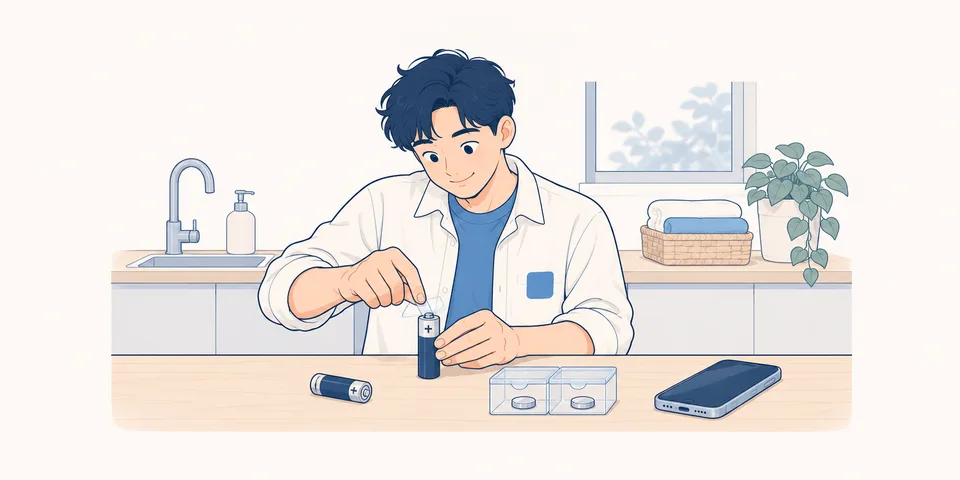
You clear out a drawer and find two batteries from a remote, a button cell from the kitchen scales and an old phone. Set them apart. Even a spent battery can spark. Australia's environment department advises keeping old batteries out of household rubbish and kerbside recycling bins. [S1]
Intact batteries you can take out normally
Check what your local shop's drop-off box accepts before you take anything in. On each loose AA or AAA battery, cover the metal contacts at both ends with clear, non-conductive tape. Protect the contacts on button batteries too. Keep loose batteries away from coins, keys and other battery terminals, and keep button batteries out of children's reach. [S2]
Devices with batteries sealed inside
Take the whole phone to a participating MobileMuster drop-off point. For a power bank or another device with a built-in battery, check with your council or an e-waste collection point first. Leave the casing intact. [S1][S5]
Swollen, leaking or unusually hot batteries
Stop using or charging the device. Keep it out of a shop's ordinary drop-off box and don't set off carrying a device that is still hot or smoking. If there's no fire, tell your local council what the device is and what's wrong with it, then ask where and how to hand it over. If it catches fire, move to safety and call Triple Zero (000). [S3][S4]
Comments
Share a related experience or ask about the article
No comments yet. Ask a question about the article.
Sign in to discussKeep the discussion about the content. Do not post private information or advertisements.