

Practical guides · Settling in and public services · In-depth article
What to do with food in your fridge and freezer after a power cut
Keep the doors closed, record the outage and use time, temperature and signs of thawing to decide what can stay. Includes overnight outages and flood exposure.
Based on: www.foodstandards.gov.au; retrieved: 2026-11-18.
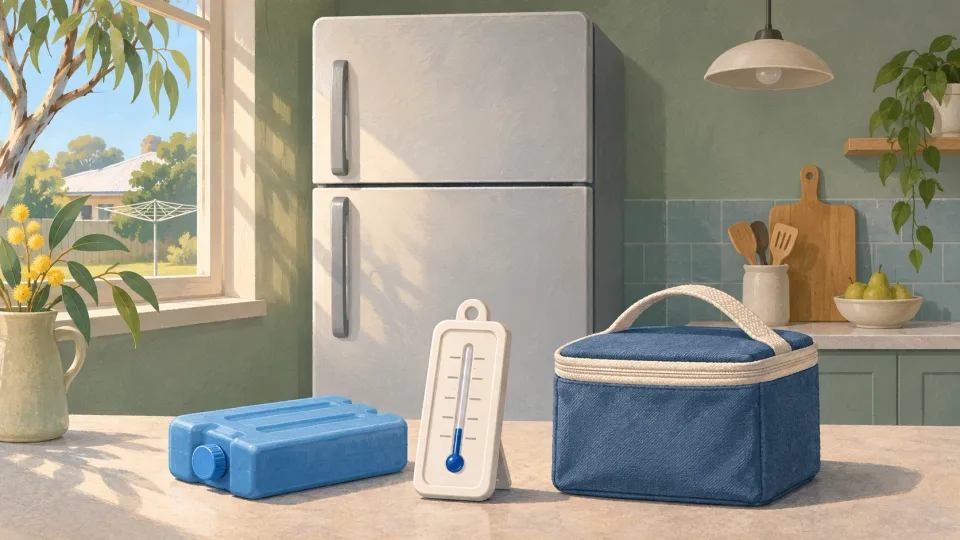
When the power goes off, keep the fridge and freezer doors shut and note roughly when the outage began. Check your power provider’s outage information if you need a time. First keep the food cold, then assess what to keep after power returns. [P1]
Use the time estimates to decide what to do next
Where the food is | How to use the estimate |
|---|---|
Fridge | Food Standards Australia New Zealand (FSANZ) says a closed fridge can keep food cold for around four hours. Refrigerated foods should stay at 5°C or colder. Frequent door openings and an unknown start time make a reliable temperature record more important. |
Freezer | FSANZ estimates around 24 hours before defrosting with the door shut. Keep items frozen if you know they stayed frozen. Food that has thawed should stay out of the freezer. |
If the outage is getting close to the fridge estimate, transfer perishables once to an insulated cooler with ice packs if you can keep them cold there. Check with a thermometer. Seal raw meat separately so that liquid cannot drip on ready-to-eat food. [P1] [P2]
Check these foods first when power comes back
Start with raw meat, fish, milk and cooked leftovers. Discard food with an uncertain temperature history if you cannot confirm that it stayed safely cold. Discard perishable food after four hours at room temperature. Count time at room temperature separately from the length of the outage. A fridge that has cooled again tells you its current temperature only. [P1] [P3][P2]
Check frozen items individually. If they are fully thawed, or you suspect they thawed and then hardened again, discard food you cannot confirm is safe. FSANZ advises against refreezing thawed food. [P1]
Treat flood exposure as contamination. Fridge and freezer door seals can let floodwater in. Discard food that contacted floodwater and avoid tasting it to test safety. [P3]
If the outage happened while you slept
If you find the fridge off in the morning without a temperature record, try to establish when power was lost. If you still cannot confirm whether opened milk or cooked rice stayed cold, discard them. Keep ice packs, an insulated cooler and a fridge thermometer accessible for the next outage. [P1] [P3]
Comments
Share a related experience or ask about the article
No comments yet. Ask a question about the article.
Sign in to discussKeep the discussion about the content. Do not post private information or advertisements.