

Working life · In-depth article
Working an outdoor shift in the heat? Know when to stop
Find the shade, drinking water and first aider before starting. Know when heat symptoms mean stopping work or calling Triple Zero.
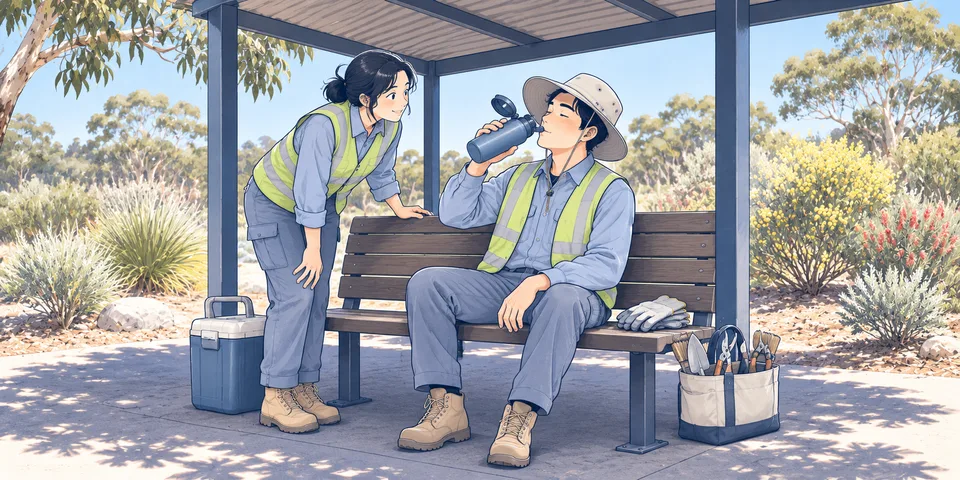
You carried tools under a shelter in the morning. At midday you’re asked to carry the rest across an open patch of sun. The load hasn’t changed, but the conditions have. Tell your supervisor what you’ll be doing, how long you’ll be in the open and what protective gear you’ll be wearing. Find out where the water, shade and first aider are before anyone needs them. [S1]
Look at the job as well as the temperature
Safe Work Australia doesn’t set one stop-work temperature for every job. Humidity, airflow, the time and effort the work takes and how used people are to the heat all matter. Stacking gear under a breezy shelter and carrying it in protective clothing through a still, sunny work area can put very different demands on a worker at the same air temperature. Review the breaks when the task or location changes. [S1]
Ask what the crew can change on this shift
See if the heavy lifting can happen earlier and if people can do a sheltered task while the sun is strongest. Ask where everyone can take a shaded break, how to get drinking water and how to reach the first aider. If someone is new to outdoor work, have a colleague check in. Notice changes such as a person slowing down, stumbling or struggling to answer clearly. [S1]
Stop and get help for the early signs
Say a worker gets a headache, feels dizzy or starts to feel sick while carrying gear. Stop the task safely and get them somewhere cool. Ask the supervisor or first aider to come. Tell them how long the worker was in the heat, when the symptoms started and whether they can answer normally. Have someone stay with them while the first aider assesses what to do. [S2]
Call Triple Zero if they’re confused or collapse
If the worker becomes confused, collapses or loses consciousness, call Triple Zero (000) immediately. Follow the operator’s directions on cooling them while help is coming. Send someone else to get the first aider and meet the ambulance. Give the street address, the nearest gate and where you’re working. The crew doesn’t need to diagnose heatstroke before making that call. [S2]
Comments
Share a related experience or ask about the article
No comments yet. Ask a question about the article.
Sign in to discussKeep the discussion about the content. Do not post private information or advertisements.