

Loading content…
Loading content…
Loading content…
Travel and food · In-depth article
Find out what happened during processing, what the finished product contains and what supports a health claim.
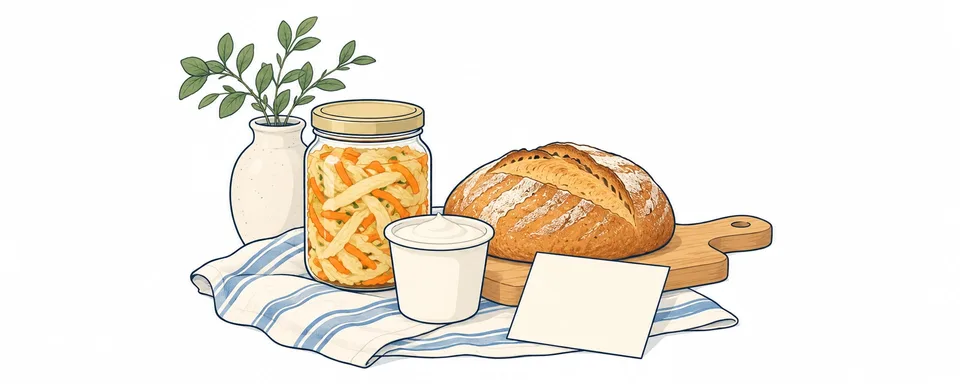
Live cultures can be part of making a food. Subsequent heat treatment, filtration or storage can change what is present by the time it reaches the shelf. With yoghurt, bread or a jar of fermented vegetables, start with the details for the actual product.
Look for a culture or strain named on the label, any statement about live organisms and the storage directions. Treat a claim about a finished product as specific to that product. The FSANZ dairy risk profile discusses how processing and storage affect microorganisms in dairy products.[S1]
Some general-level food-health claims rely on a relationship the company substantiates. In that case it must follow the evidence requirements and notify FSANZ before relying on it. A notification on the list is a record of that step. Look at the exact effect claimed and the conditions that apply.[S2]
A national survey sampled kombucha, kefir and other fermented drinks in 2017–18 and found alcohol-label compliance issues in some samples. For a bottle on sale now, check its own label and ask the supplier if the alcohol information matters to your purchase.[S3]
Comments
Share a related experience or ask about the article
No comments yet. Ask a question about the article.
Sign in to discussKeep the discussion about the content. Do not post private information or advertisements.