

Life · Canberra · In-depth article
Spotting superb fairy-wrens at Canberra’s botanic gardens
Look low around the shrubs. Two field photographs show what to look for on a blue breeding male and a brown female.
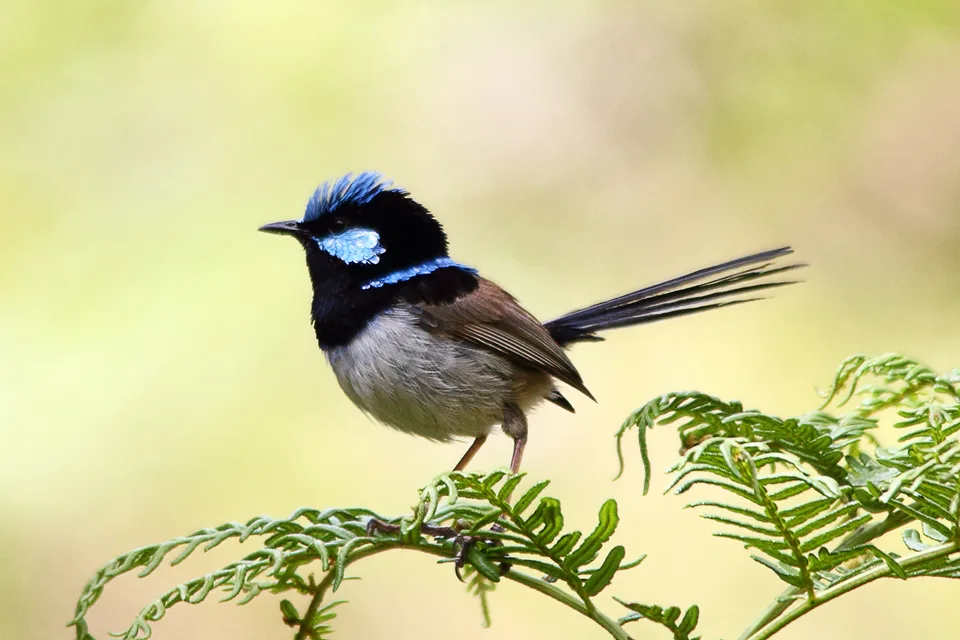
At the edge of the Eucalypt Lawn in Canberra’s Australian National Botanic Gardens, give the low shrubs a moment. If a small bird darts under the branches, pause on the path. It might hop out onto a bare twig or the ground. The Gardens’ bird-spotting booklet lists the superb fairy-wren (Malurus cyaneus) here. [S1][S3]
Photo by Wayne Butterworth · original file · licence CC BY 4.0
What to look for on a blue bird and a brown one
Start with the bird in the cover photo. On a male in breeding plumage, the crown and cheeks flash bright blue above a dark throat. The wings are still brown. If all you see is a narrow tail disappearing into the shrubs, wait for a side-on view.
The female in the second photo has a pale throat and reddish brown around the bill and eye. Make a note of those details if you see a brown bird. A male’s blue breeding plumage comes in at different times, so brown alone won’t tell you the bird’s sex. If it vanishes before you get a good look, leave the identification open. [S2]
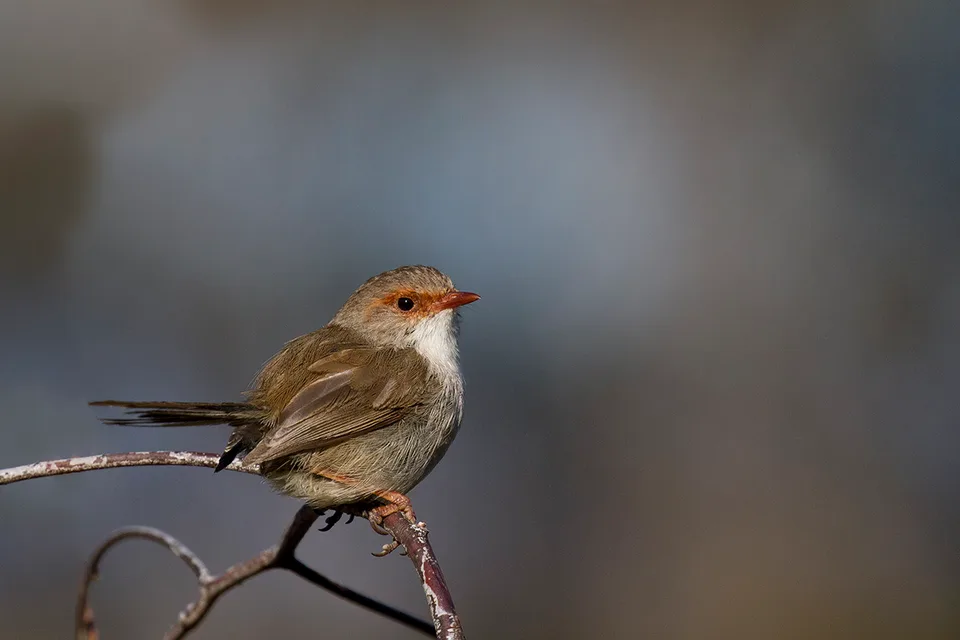
Photo by Patrick_K59 · original file · licence CC BY 2.0
Why some males turn blue earlier
Australian National University researchers Andrew Cockburn, Michael Double and Helen Osmond studied fairy-wrens at the Gardens. The researchers found that females in their study favoured males that moulted into blue breeding plumage earlier. You can see birds at different stages of moult in the same season. Stay on the path and let them come out to feed in their own time. [S2]
Comments
Share a related experience or ask about the article
No comments yet. Ask a question about the article.
Sign in to discussKeep the discussion about the content. Do not post private information or advertisements.